

PSS seals, known for their robustness and reliability, are key elements in boat mechanics. They guarantee a perfect seal and eliminate the risk of leaks, particularly on the propeller shaft.
How do they work?
The principle of PSS seals is based on a mechanical face seal. The seal is achieved through the contact surface between the flat faces of a rotating stainless steel rotor and a stationary carbon ring. This system, where the seal is ensured by a rotating stainless steel ring rubbing against a stationary carbon ring, offers optimal safety.
Why choose a PSS seal?
The advantages are numerous:
- They offer a reliable and durable solution for both powerboats and sailboats.
- The PSS shaft seal promises zero leaks for the propeller shaft.
- The choice of seal depends on your propeller shaft diameter, ensuring perfect compatibility.

PSS Seal Models
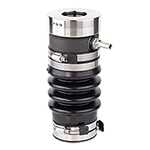
PSS Type A
Pour arbre de 20mm à 95mm (3/4" à 3-3/4")
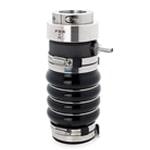
PSS Type PRO
Pour arbre de 20mm à 95mm (3/4" à 3-3/4")
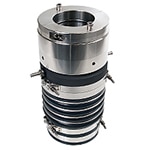
PSS Type B
Pour arbre de 100mm à 150mm (4" à 6")
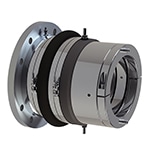
PSS Type C
Pour arbre de 165 mm à 205mm (6-1/2" à 8")
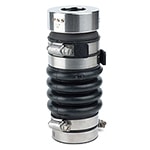
Joint pour mèche de safran
Pour arbre de 32mm à 150mm (1-1/4" à 6")
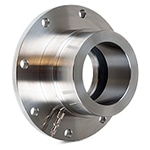
Bride d'étambot
Pour arbre de 63.5mm à 150mm (2-1/2" à 6")
How does a PSS mechanical seal work?
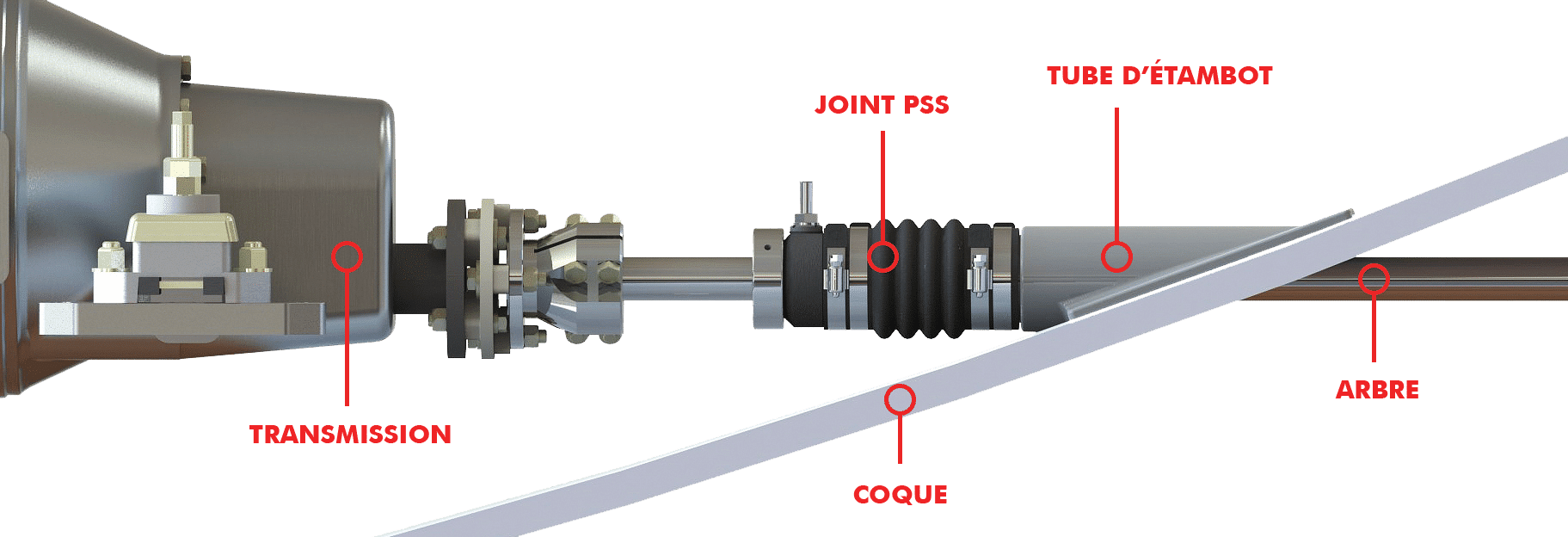
PSS seals are mechanical seals. The seal is created by the contact surface between the flat faces of a stainless steel rotor, rotating with the shaft, and the stationary carbon stator. The carbon is held to the stern tube by means of a nitrile (EPDM) bellow and stainless steel clamps. The stainless steel rotor is installed against the carbon and compresses the bellow. It is secured to the shaft with set screws.
This compression maintains the two faces in contact and compensates for engine movements due to propeller thrust. The carbon is bored to a diameter larger than the shaft, allowing it to float around the shaft and absorb any vibrations from the shaft line. The stainless steel rotor's seal is ensured by two O-rings inserted into the rotor. They rotate with the propeller shaft and therefore cause no wear or friction on the shaft, unlike lip seals which require a shaft with a perfect surface for installation and deteriorate it over time with friction.
PSS seals can be mounted on shafts where the surface is slightly altered by wear, slightly pitted, or corroded. Unlike other solutions like stuffing boxes or lip seals, PSS seals can withstand a short interruption in cooling or use in silty waters without suffering damage.
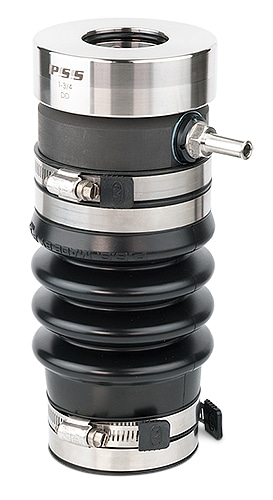
PSS Seal Components
Stainless Steel Stop: Rotor
The stop, composed of a Stainless Steel (316L) piece, slides onto the shaft and is held by 2 set screws positioned at 90° to each other to ensure optimal hold.
Bellow
The design of the bellow ensures good contact between the rotor and the carbon and absorbs shaft vibrations and movement. It is held in place by 4 stainless steel clamps.
Vis 1/4 de tour Baïonnette
Vis 1/4 de tour Baïonnette
Vis 1/4 de tour Baïonnette
Carbon Ring: Stator
The quality of the carbon used in PSS composition allows use up to temperatures of 260°C / 500° F, and allows, unlike lip seals, to run dry. The high density of this carbon also guarantees longevity and resistance to friction. We have recorded PSS usage on commercial vessels exceeding 40,000 engine hours (4 years continuously) with the original components. In all cases and under normal use, the Carbon should never need to be replaced.
PSS Seal Certifications
PSS seals are approved and certified by RINA, Bureau Veritas, and ABS

RINA

BUREAU VERITAS

ABS
Videos
Find a PSS Dealer
PSS mechanical shaft seals are available worldwide.
Use the map below to find the nearest dealer to you.